

The OTR drivers and small fleet owners generally do not have dramatic revenue issues. A good business deal for them is achieving the targets of logging miles, delivering loads, and receiving timely paychecks. In short, trucking is seen to be stable, or even rising over time, according to the figures. However, the loss of revenue for some drivers often is despite the fact that they have too much workload, instead of extra flow of money due to stable freight rates. The true reason is that OTR revenue is also hidden by losses that are not shown as a large amount at once.
Not all hidden trip losses come as direct losses that are easy to notice and track. They can be due to delay, poor scheduling, imprecise logistics, and other relevant issues that may look “normal” in long-haul trucking. These losses typically do not appear as separate loss line items on the balance sheet. They rather get disguised as fuel efficiency losses, unpaid time, operational flow disruption, administrative overhead, and minor planning misunderstandings. Individually the losses seem within control. Together, they add up to regular revenue loss that has a negative effect on OTR profitability.
In order to find out what is eating OTR income, you need to look deeper into the mileage pay and gross numbers. One has also to look at the performance of each truck trip after all costs like trip costs, logistics costs, and operational costs are taken into account. It will be the myriads of lost, hidden trips that negatively impact OTR business operations that this article explains and it also states why the reducing of OTR costs is about controlling the preservation of revenue more than driving more.
Gross Miles vs. Real OTR Revenue
One of the many false assumptions long-haul drivers make is that a high number of miles leads directly to a high fortune. With the gross income pay lookout for what seems to be easy to see, a convincing number comes out. All that is required is to measure the miles, say the rates, read out the loadings, and look into the financial implications. Nevertheless, the numbers do not really reflect how much revenue actually survives after the trip.
OTR revenue equals not just what you make on top of your expenses, but also what is left after every operational issue takes the part. The truck trip costs are included from the very beginning of the journey. They add up during the travel, too, which results in lost income. Fuel, time delays, repairing costs, safety work, and trabalho residual often concerns the driver with less money than he originally thought. Though focusing on the miles is prioritized by drivers, it could be a root cause for their ignorance of the cost side which until then they might consider being all good.
This is where the revenue leakage begins. Hidden losses differ with not being felt as clearly like breakdowns or accidents that are symptomatic. They appear as day-to-day activities and hardly ever get associated with different decisions on the same route and cost increases in the long term. As a consequence, drivers may not connect the dots as to why their freight hauling numbers stay down even when shipping volumes solidly remain.
A Complete One-Hour Guide to Quickly Turn Profit in Trucking w/ Jared Flinn
How a Single Trip Loses Money in Pieces
The fail-or-no-fail rule does not apply to a single OTR trip most of the time. It hardly is ever just one major mistake that dooms it. Rather, it is the losing revenue from a series of tiny errors. Like in the case of waiting an extra thirty minutes in the shipper. Idling longer than what was planned. Accepting the route that looks like it is shorter but in effect, adds tolls and congestion. Showing up late enough to mess everything up for parking and resting. Every little decision subtracts a fraction of potential revenue.
What makes these losses so dangerous is that they are invisible. Very few drivers do a full cost analysis on the trip after each run. Most of them are judging if the load was paid enough or if the miles were worth it. This view on success is removing the angles of how time, fuel, and energy were spent and seeing their operational costs arise above the guide which they initially set.
In the long run, the accumulated losses through those various trips are significant, leaving the logistics department with a bigger cost and lower productivity. The lowered income from revenue leakage is commonly perceived as a minor issue, and accordingly, the profit remains irrational.
How Hidden Trip Losses Accumulate During a Single OTR Run
| Hidden Trip Factor | How It Appears in the Trip | Resulting Impact |
| Waiting extra time at shippers | Waiting an extra thirty minutes | Reduced usable driving time |
| Extended idling | Idling longer than planned | Increased fuel costs |
| Route misjudgment | Route that looks shorter but adds tolls | Higher logistics expenses |
| Late arrival timing | Showing up late for parking and rest | Fatigue and time fragmentation |
| Multiple small decisions | Every little decision subtracts value | Fractional revenue loss |
Hidden Costs in Trucking That Drain Your Profits
Unpaid Time: The Silent OTR Revenue Killer
Unpaid time is indeed one of the most miscalculated losses referencing hidden trip losses. A time-consuming Detention, waiting at docks, delayed check-ins, and an inefficient schedule are some of the major factors that eat hours that are not fully compensated. Even if detention pay is available, it does not cover the time since the drivers lose the ability to drive properly, thus damaging the quality of the trip.
Common sources of unpaid time mentioned in this article:
- Detention
- Waiting at docks
- Delayed check-ins
- Inefficient scheduling
- Unpaid hours of waiting
Unpaid waiting is not only the issue of that particular stop but it goes as far as changing delivery windows, reducing flexibility, and forcing drivers into not ideal parking and resting situations. The secondary damage would be rising fatigue and shrinking the margin for error on the remainder of the trip. So, over a long period, the unpaid waiting time will not be just a minor expense but quite a big one for the OTR operations.
As waiting is a common phenomenon, most drivers regard it as something unavoidable. It is, however, the unpaid time is a kind of a direct revenue loss and indirect operational damage that is generated by this. If these drivers ignore unpaid hours of waiting at docks, etc. it will lead to the systematic underestimation of OTR revenue that gets consumed.
Fuel Efficiency Losses Beyond MPG
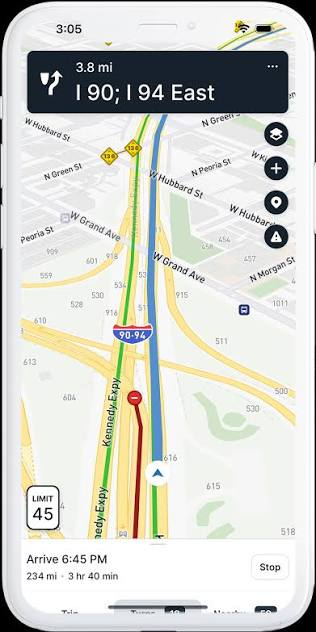
Fuel is often regarded as a single variable: miles per gallon. Although, this metric is important, it does not explain all the aspects of fuel usage. Variables beyond engine performance, such as the time of idling, the selection of roads, speed control, routing, and stop-and-go traffic all can determine fuel consumption in ways that the MPG number will never tell.
Factors beyond MPG that influence fuel usage:
- Time of idling
- Selection of roads
- Speed control
- Routing decisions
- Stop-and-go traffic
The problem of minor inefficiencies is that they usually are not alone. Extra idling fuel cost, aggressive acceleration on hills, and bad route decisions hurt logistics costs while not benefiting productivity. Cargo transporters who keep a relatively good MPG track can still run into fuel-related trouble if their operational practices are inconsistent.
In the earlier times, fuel efficiency losses emerged and scaled with the number of activities carried out under inefficient conditions. But, the problem of revenue erosion is already rampant. The only way to improve the bottom line is to treat the fuel parameter not just as a compelling conversation topic in the truck drivers’ breaks, but as a truly whole system issue that goes beyond genuine driving habits.
Deadhead, Routing, and Planning Errors
Deadhead miles do not get noticed when they seem short or necessary. But to the extent they are mismanaged, even church deadhead miles result in a loss to the freight business. Any mile driven without cargo has fuel costs, time costs, and lost-opportunity costs associated with it that thereby decrease the overall efficiency of the trip.
Another routing assumption is the matching concept for the problems discussed with the previous uncertainties. Decision making based on the traffic that seems low at a certain time but actually carries tolls, congestion, or complex last-mile access often results in an increase of operating costs. Poor trip planning magnifies logistics expenses that do not appear in rate negotiations but directly affect OTR profitability.
These losses go on because planning mistakes are hardly noticed. They seem to be minor inconveniences rather than fundamental issues. Nonetheless, through the cumulative effect of small inconsistent planning, they undermine the regular flow of income.
Maintenance Timing and Operational Breaks
The maintenance job itself has no conflict of interest when it comes to profits. However, it is about the poor timing that makes the maintenance move against the profit. The unexpected service delays that happen because of the misplaced repairs and deferred preventive work take away from productive hours and traffic flow. It is just that at the most unfortunate moments these interruptions occur, thus the revenue loss multiplies not just by the repair cost.
Maintenance that causes issues on operations decreases both the freight load reliability and the level of loss. Moreover, they bring in scheduling pressure, weariness, and lower decision quality. The problem sometimes arises not from the repair itself but from the opportunity cost of not being able to do higher-value work.
Maintaining OTR revenue should mean looking at maintenance as an integral part of the trip strategy instead of a separate obligation.
Fatigue, Decision Quality, and Revenue Leakage

Fatigue is frequently topical in the context of safety, but its financial implication is also significant. When drivers are tired, they take longer to make decisions, they miss chances, and they accept inefficiencies they would normally not say yes to. Tired drivers reduce productivity and increase transport costs through mistakes, delays, and poor judgment.
How Operational Factors Drive Revenue Leakage in OTR Trucking
| Operational Factor | Immediate Effect | Long-Term Outcome |
| Fatigue | Slower decisions and missed chances | Increased transport costs |
| Poor parking planning | Idle hours and parking costs | Reduced next-day productivity |
| Maintenance timing issues | Lost productive hours | Opportunity cost and lower profits |
| Administrative workload | Unpaid labor time | Permanent revenue drain |
| Inconsistent execution | Lower reliability | Freight business losses |
The opposite of fatigue-induced revenue leakage is short yet disparate delays in economic opportunities. Misleading signs that no one was parking in near places make it hard to route properly, thus leading to idle hours or parking costs. Over extended timespans, losses from fatigue down to the level of missing opportunities approach or surpass the more visible costs.
The OTR efficiency hinges on decision quality, while decision quality heavily relies on the physical and mental state.
Parking, Safety, and Time Fragmentation
The parking situation creates a goldmine of problems. Searching for parking at the end of the day is a move that wastes time, increases stress, and disrupts the rest. Unsafe or poorly planned parking not only compromises security and recovery but also adds fatigue and risk to the subsequent legs.
Fragmented time and parking problems reduce driving efficiency and raise operational costs. The loss does not only refer to the minutes of searching for a parking spot; it spreads into the next-day productivity and the number of mistakes made. Parking is a strategic financial matter as much as it is a logistical one.
Administrative Load and Hidden Labor
Administrative work is often not recognized in the decision-making process of a trip. The necessity to paper work, compliance tasks, check-ins/outs and demand of communication takes away time that is not paid for directly. These hidden labor hours amount to a permanent drain on OTR revenue.
Since these requests are unavoidable, many drivers stop noticing them. But after some months, the administrative load becomes an intangible contributor to the revenue wastage. Reducing the OTR costs necessitates recognizing the unpaid labor as part of the overall trip cost.
Driver Retention Costs as a Trip-Level Loss
Driver turnover is often seen as a company issue as opposed to a trip-level loss. Driver retention costs however affect every load from training inefficiencies, adapting, and inconsistent execution that all contribute to operational instability and lower profits.
For the owner-operators and small fleets, unsteadiness strikes the trip performance directly. Temporarily unattainable efficiencies during the transition sum up as freight business losses lurking in the shadows. Associating the driver’s retention with the OTR economics unveils the true expense involved.
Control OTR Revenue, Do Not Chase Miles
Maximizing profits is not about spinning the wheels. Instead, it is about preventing revenue loss on each trip. Hidden trip losses remain prevalent when drivers focus on activity instead of the outcome. Miles are the key to opportunity creation, but efficiency is the only way to guard that profit.
The best way to reduce OTR costs is to recognize that they begin from a lack of awareness. An OTR trip cost analysis, disciplined planning, fuel strategy, fatigue management, and operational timing all are positive contributors to better OTR profitability. The drivers when they shift track from mileage thinking to revenue preservation, profitability becomes more predictable.
No big blunder eats away OTR revenue. It is consumed slowly, quietly, and consistently with the small choices that feel harmless. It is all about understanding and controlling those decisions which is the line between working harder and earning more.
FAQ: OTR Revenue, Hidden Trip Losses, and Profit Control
1. What are the most common hidden factors that lower the income of trucking businesses?
The principal causes of trucking revenue decrease are not necessarily the drop in rates but the accumulation of inefficiencies. Uncompensated waiting time, fuel wastage, misrouting, maintenance at wrong intervals, and bad decisions due to fatigue all contribute to increased transportation costs, although they are not expressly calculated on the statements. These issues are the main culprits that sunken slowly through several trips hurt the overall profitability.Over time, this makes it difficult to optimize trucking profits without addressing the root causes.
2. Why do trip losses rarely appear in standard trip reports even if it’s one of the top 10?
It is common for the top 10 trip losses to be represented in the report as different items. Sometimes, they get lost among the figures about fuel usage, idle time, administrative labor, parking delays, and decision fatigue. Due to the fact that they are in different formats, drivers do not always realize them on the trip reviews. However, these losses are exactly what add up to the overall freight hauling losses that are visible in the trip reports.
3. What would drivers do to keep hidden expenses in check instead of driving less?
Drivers can reduce hidden expenses by rather driving well than driving a short distance. This involves things like planning ahead for parking lots, minimizing unpaid time, devising fuel-efficient strategies other than MPG, and scheduling maintenance that coincides with trips. Reducing wastage on the same mileage is often more impactful as compared to the additional mileage.This approach helps minimize hidden expenses without reducing overall activity.
4. Is trip cost analysis absolutely indispensable for the OTR profitability?
Yes. The trip cost analysis is a significant factor in determining the precise profitability of OTR. Without it, transport costs are likely to remain underestimated and the loss of revenue persists unnoticed. Drivers, who conduct a trip analysis, are better positioned to learn where losing money happened and what can be done to avoid that.
5. What is the impact of the driver retention cost on the long-haul profitability?
Driver retention costs, being primarily seen as an HR issue, affect the trip performance directly. Training gaps, adjustment time periods, and the loss of steadiness in the operational process bringing freight hauling losses higher and fleet reliability lower. Consistent driver turnover stabilizes, which improves productivity and profit optimization in trucking over the long run. Managing driver retention costs therefore becomes a direct profitability factor, not just an operational concern.
6. Can cutting losses achieve maximum trucking revenue?
Of course. The quickest way to enhance the trucking revenue is not by driving more but controlling the losses. With cut back hidden inefficiency, the degree of gross revenue being intact is increased. This technique can support drivers and little fleets to tune-up trucking profits without additional workload or fatigue.In practice, controlling losses is the most reliable way to maximize trucking revenue.