
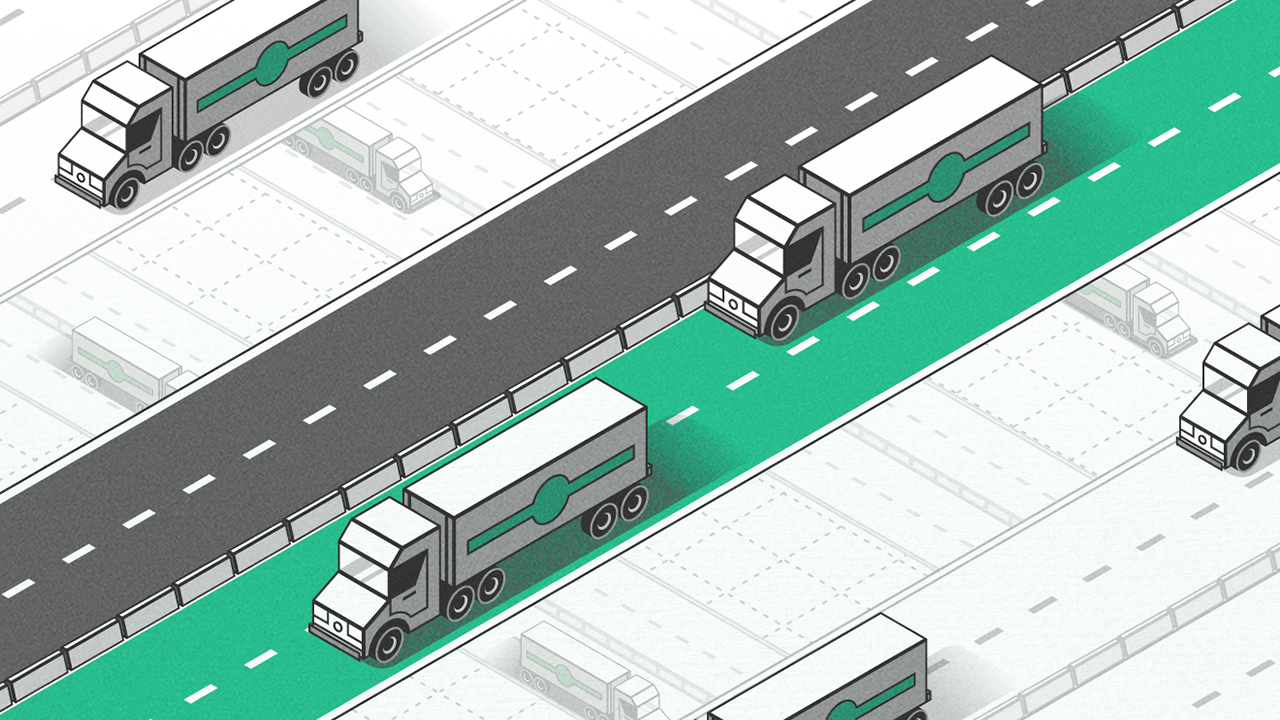
Dedicated accounts have come to the forefront as the main discussed careers in truck driving today, particularly to those who have grown weary of the element of chance and never-ending factors such as route changes, pay, and home time. If over-the-road driving basks in the glory of being the largest provider of freight transportation jobs, many truck drivers instead of searching for some famous driver more commonly find dedicated accounts a way to give themselves a break after long periods of time. Nevertheless, despite their increasing demand for dedicated accounts, there are numerous incorrect facts about this that drivers have; assumptions that do not always correlate with reality. 
What Is a Dedicated Account?
In simple terms, a dedicated account is a contractual freight operation which is exclusively associated with a specific customer or group of customers. Instead of being an independent trucker who hauls random loads from the spot market or dividing through different shippers, drivers assigned to a dedicated account shunt a specific freight lane, distribution network, or retail operation. This arrangement alters not only the way freight is handled, but also the experience of a driver on a day-to-day basis.
Should I Be a Dedicated Truck Driver? Pros and Cons of Dedicated Freight
Dedicated Account Stability Explained
The question that is most frequently asked by drivers is whether or not dedicated accounts provide true stability or the scope that they are not really so. The answer depends on the way those accounts are created. It should not be taken literally that dedicated account stability is offering a shorter mileage or less workload. The real secret is invariance. Freight volume is normally committed weeks or months ahead of time, customer demand is usually predictable, and dispatching decisions follow fixed contracts instead of reacting to daily market swings. Simply put, these factors counteract saying drivers are more often exposed to such usual things as sudden load cancellations, a decrease in rates, or unanticipated route changes that are very typical for irregular operations.
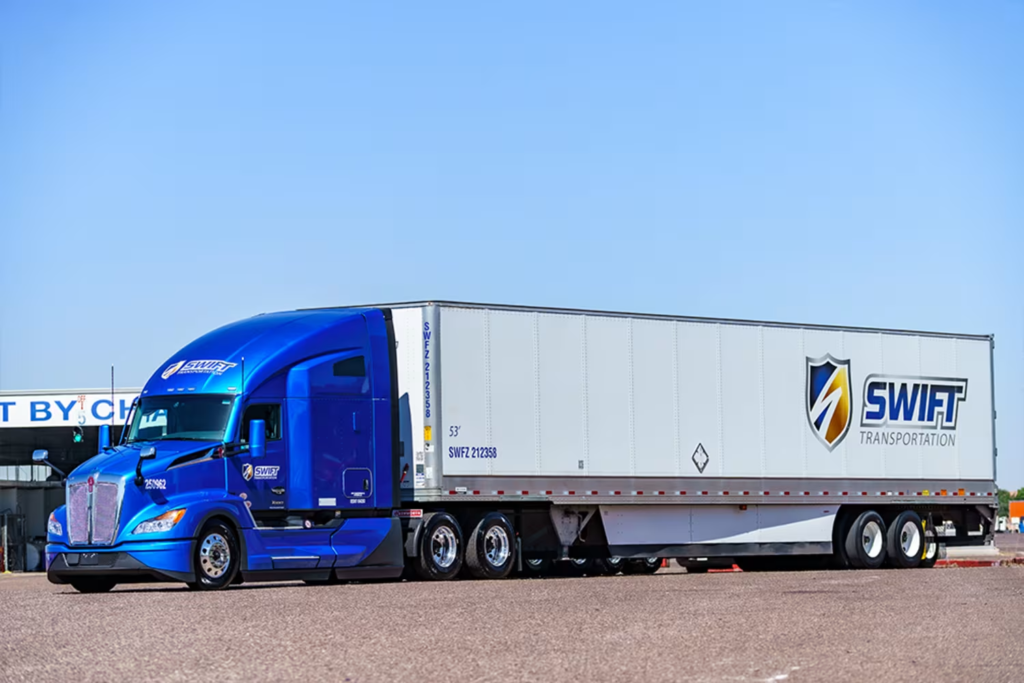
This predictability is often compared by drivers to the financial stability found in structured systems such as social security, where planning replaces uncertainty.
Dedicated Lanes Vs Dedicated Customer Freight
Key Stability Factors in Dedicated Accounts
- Fixed customer contracts
- Predictable freight volume
- Planned dispatch cycles
- Reduced exposure to spot market volatility
Dedicated Account Requirements
But being stable does not mean that you are simple. Dedicated account requirements, in most cases, are tougher than those in general fleet jobs. This is because customers expect the carrier to be reliable, have good safety records, deliver on time, and be professional since it is the carrier that represents their brand directly to the public. Therefore, drivers on dedicated accounts may have to deal with greater standards in regard to punctuality, communication, the appearance of the uniform, and adherence to the company’s detailed procedures. It is not that these requirements are introduced in order to restrict drivers, but to keep the long-term contracts that are advantageous to both the carrier and the workforce.
Typical Dedicated Account Driver Expectations
- Strong safety and compliance record
- Consistent on-time performance
- Professional customer-facing conduct
- Adherence to account-specific procedures
Pay Structure and Compensation Models
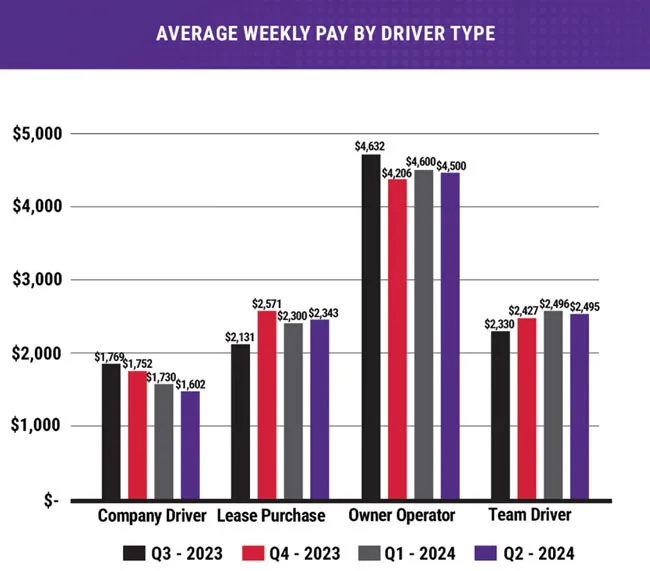
The biggest worry is, of course, the pay. Many drivers suspect that dedicated accounts generally offer lower pay as the routes are not so complicated and there are fewer miles driven. Truth is that regional driver pay on dedicated accounts has its own conditions, it is not necessary to say it is lower. The package of compensation for drivers may include hourly pay, CPM, a mixture of both or performance bonuses which depend on the metrics of service instead of raw mileage. According to the findings, dedicated account truck driver compensation often rewards consistency over short-term peaks.
This approach resembles structured SSI benefits, where consistency and reliability matter more than sporadic high payouts.
Indeed while an over-the-road driver may have a high-gross week once in a while, a dedicated driver on the other hand, typically enjoys a reliable income base for more months.
Dedicated Account Pay Models
| Pay Model | Description | Best Fit For |
| Hourly Pay | Paid for all on-duty time | Urban & dock-heavy routes |
| CPM | Fixed mileage lanes | Long predictable routes |
| Hybrid Pay | Hourly + mileage/bonuses | Mixed operational demands |
Monetary income for drivers on dedicated accounts is basically arranged in a way so as to minimize the effects of indisputable or random income. Hourly pay in a dedicated account covers all the time a driver is on duty which includes the time spent waiting, and loading/unloading. The CPM-based dedicated accounts concentrate on easily predictable lane miles while hybrid pay models are like a mixture of hourly wages with mileage or other activity-based incentive schemes.
For many drivers, this stability eliminates concerns similar to those faced when managing past-due benefits or unpredictable income gaps.
This system connects worker’s wages with the practical realities of regional operations pay, that is, where delays and customer schedules dominate long highway miles.
Growth Opportunities Within Dedicated Accounts
Drivers also look out for areas of growth. The dedicated account growth does not have to be a step up the traditional ladder. More often than not, they take the shape of better schedules, favored routes, specialized equipment assignments, or leadership roles within the account.
These opportunities reflect the long-term business potential of dedicated freight operations for experienced drivers.
Veteran drivers can take on training roles, lead drivers, or account mentors to add value by assisting onboard newcomers and keeping service standards. These posts not only secure employment but also come with a higher salary or perks.
Home Time and Lifestyle Stability
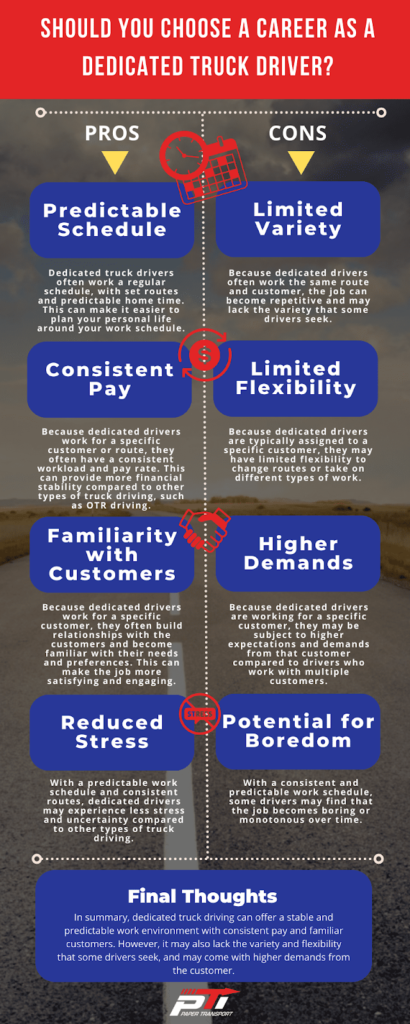
One of the major benefits of dedicated accounts refers to the predictability in home time, which becomes a priority for drivers. Although no truck driver job can promise to be perfect, achieving dedicated objectives will usually involve straightforward policies regarding home time that drivers can trust.
This predictability is especially valuable for drivers supporting families or managing responsibilities similar to those associated with a child’s disability.
The repetition of routes and the known freight cycles mean that planners can set out a plan of action that goes along with the way driver like to live. The end result of this well-designed work-life balance is an increase in the drivers’ retention rate and less burnout especially for those who concentrate on family and health in the long run.
Dedicated vs General Fleet Comparison
| Aspect | Dedicated Account | General Fleet |
| Route Predictability | High | Low |
| Home Time | Structured | Variable |
| Income Stability | Consistent | Fluctuating |
| Customer Expectations | Fixed | Changing |
Change Management and Transparency
However, dedicated accounts are also subject to changes. Customers come and go, contracts get fulfilled and freight patterns change. The difference moves into management style. Dedicated accounts are usually redesigned and delivered with a clear message well in advance to the drivers for the latter’s own personal time and decision-making process of shifting to another account in the same carrier.
This level of transparency is often compared to clearly defined account title rules in financial systems.
This is a basic management practice which is usually absent in a normal operation and serves as one of the reasons so many drivers like dedicated work.
Financial Planning Advantages
Dedicated accounts are also the jobs that need drivers to have a higher level of financial management awareness. Because the income is more stable, budgeting becomes easier. Drivers can plan savings, manage expenses, and make long-term financial decisions with more confidence. For some, this includes planning for large expenses such as housing modification or long-term investments. This is especially important for drivers who are building personal assets, supporting families, or preparing for future transitions within the industry.
Clarifying the “Dedicated Account” Term
A point of confusion is the very name “dedicated account” that seems to have gained non-trucking financial terms for dedicated accounts such as SSI dedicated accounts or Social Security-related accounts. These are not the same things at all. In trucking, a dedicated account is only about freight operations.
Unlike financial accounts, issues such as interest earned or benefit eligibility do not apply to trucking dedicated accounts. It is totally irrelevant to Social Security benefits, representative payee structures, allowable expenses under SSA rules, or account types like checking accounts, savings accounts, or money market accounts. Synthesizing both expressions in one word “dedicated”, the two are not at all linked in terms of purpose.
A proper identification of this fact is very significant in dispelling falsehoods, especially in case of drivers who carry the load of employment and personal financial management at the same time.
Equipment and Operational Specialization
Another equipment question concerns the equipment itself. Dedicated accounts often have specialized trailers, truck assignments, or customer-specific modifications. This may involve liftgates, refrigeration units, custom securement systems, or other special equipment designed to meet unique customer requirements.
Though this contributes to the increase of operational discipline, it also promotes safety and efficiency.
In the end, the drivers become specialists in their routes and equipment, thereby reducing risk and stress over a period of time.
Long-Term Outlook
From a business point of view, it is dedicated accounts that offer long-term opportunities for both carriers and drivers. Carriers will have stable income streams, and drivers, in return, will have predictable working conditions. This interdependence pushes investment into training, safety programs, and professional development.
Dedicated accounts also have varied entry requirements. The majority of the carriers will need a driver to have a clean driving record, a number of documented driving hours, as well as an impressive accident and injury history.
Some accounts may need the truck drivers to have additional endorsements as well as customer-specific certifications, or to undergo extra training.
A common belief is that the dedicated accounts limit how much you can earn. Yet many drivers learn through their experience that a stable regional pay, although it is lower, combined with more productive spare time and reduced stress, is far more satisfactory even if figures on the surface are similar.
Fewer unpaid delays, predictable schedules, and less stress are what contribute to long-term performance and health.
Leave your doubt behind on whether you will still find a dedicated account role in a current company. Companies are ready to put money where their mouth is and will keep these contracts active-hitting their driver base directly.
As much as having a dedicated account is a good idea, drivers have to check if it fits their personal goals.
Dedicated Accounts – The Most Commonly Asked Questions
1. Will new drivers be accepted on the dedicated programs or are they only for experienced drivers?
Dedicated accounts are mainly for drivers who have good records of safety and performance. Some carriers, however, run a special program for new drivers that is dedicated to one specific customer and route. In these instances, the limited experience of the driver is usually compensated by a predictable and regimented structure.
2. Are dedicated accounts for sure the best option to earn more money than general fleet jobs?
Dedicated accounts won’t guarantee a driver the highest peak sustainably exciting income, but it will usually promote more stable pay, In contrast, general fleet drivers may encounter some weeks with high gross occasional income while dedicated account drivers more often are benefiting from fixed regional pay, in addition to less unpaid delays and the solid financial basis for scheduling that is backed by these factors.
3. What will happen if the customer contract for a dedicated account is terminated?
At the end of a contract with a customer, the carriers normally transfer drivers to another dedicated account or to a similar position within the company. The whole process of transitioning is generally announced well ahead of time so that drivers, instead of confronting unexpected changes in operations, have the opportunity to think about their alternatives.
4. Are dedicated accounts more relaxed than over-the-road jobs?
The stress level varies with preferences and the way of doing things. Dedicated accounts not only decrease the level of uncertainty about routes, schedules, and the availability of freight but are also associated with these, so many drivers over consider it less mentally taxing. Nevertheless, the higher customer’s expectations and the binding procedures might introduce a different type of pressure.
5. Do drivers who stay long in a dedicated account area have opportunities of career progression?
It is possible. A normal progression for a long-term dedicated driver is to become lead drivers, trainers, safety mentors, or account coordinators. These positions would then allow drivers to work in the same environment while having more responsibility and influencing their work.
6. Do dedicated accounts seem to restrain the drivers’ freedom in the future?
Dedicated work, on the contrary, strengthens the future by not taking any of the opportunities. For example, time spent on a structured account will bring experience that will strengthen the driver’s resume with reliability, customer service skills, and operational discipline—turning traits in the entire trucking community.
7. Is the specialized equipment always a must in dedicated accounts?
Not always. Some dedicated accounts may use standard dry vans, while others move with specialized trailers or have fittings made to suit the customer’s specifications. The equipment depends solely on the type of customer’s freight and service expectations.
8. How to determine if a dedicated account suits a driver?
The decision must be made based on personal perceptions: the stability of income against the maximization of profit, rigid schedules versus flexibility, and fixed home time against the variety of routes. The best suited drivers to the dedicated accounts are those who prefer long-term stability and consistent effort rather than constant change.