
The change from long-haul trucking to dedicated routes is viewed by many drivers in the trucking field as a normal career move. How about the end of the unpredictable schedule, the life on the road, and the promise of being home on the weekends after dedicating months or years working almost half the time away from your home? Well, dedicated driving seems to be an ideal option for this imaginary situation, right? The community of truck drivers usually prefers to recommend dedicated driving the “next stage” in the career development process. It is said that the driver can enjoy more safety, a better work-life balance, and can operate with clearer expectations.
OTR vs Dedicated is often framed as a natural driver transition rather than a radical career change within the trucking industry.
The OTR to Dedicated transition is usually not as straightforward as the promotional advertisement explains. Although there are certain parts that change the driver experience positively, the others may decrease the driver experience unexpectedly. This transition story is not about regret or praise; it is about understanding what actually changes when a driver throws the long-haul freight overboard and decides to do only dedicated routes.
This story reflects both improved outcomes and worsened realities that surface after the transition.
This article looks at both dimensions of that shift: what improves, what silently turns harder, and many drivers are amazed at why the trade-offs are so surprising.
Life on the Road: The OTR Baseline
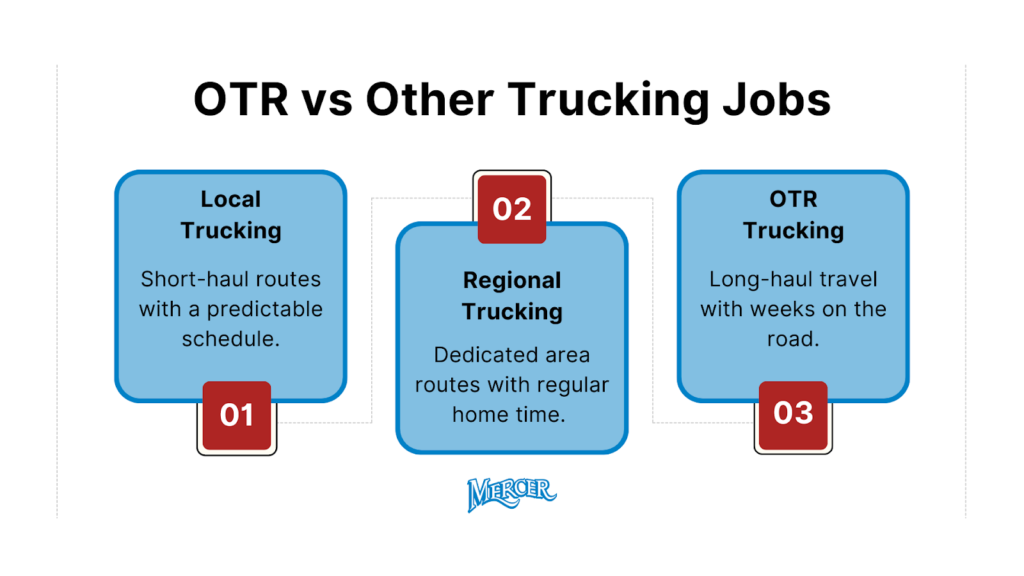
Before assessing the impact of change, it is really important to know the comparison point. Life on the road, living in OTR is characterized by long times away from home, no fixed schedule, and full autonomy. OTR drivers move around the whole country or across two or more regions, taking cargo through settings that almost always change.
Over-the-road work defines a specific logistics and freight lifestyle that shapes long-term driver identity.
Core Elements of the OTR Driving Model
- Extended time away from home
- High exposure to schedule uncertainty
- Broad geographic coverage
- Variable shipper and receiver environments
The top characteristics of OTR drivers are:
- Missing home for long periods
- No steady schedules
- High mileage Driver
- More control over routing decisions
- Changing shippers, receivers, and terminals
A lot of drivers see OTR as a symbol of freedom. However, others may become weary of living that way. The unpredictability, which is often more than just a matter of home time, accumulates. The driver, most of the times, is forced to tolerate it, not because they do not get enough pay, but because they do not feel good after some time.
Local vs. over-the-road truck driving
OTR Driving Profile Overview
| Aspect | OTR Driving |
| Schedule | Highly variable |
| Home time | Infrequent |
| Route control | High |
| Mental load | High due to uncertainty |
| Lifestyle impact | Long-term separation from home |
Reasons for Choosing Dedicated Routes
The decision to switch to dedicated routes is most often viewed as one that leads to stability. Trucking companies present dedicated trucking as a systematic alternative that still enables drivers to move freight but it goes with fewer unknowns.
Dedicated routes are promoted by many trucking companies as a stability-focused alternative to OTR operations.
The most common drivers behind this decision include:
- Desire for predictable schedules
- Fatigue from extended OTR cycles
- Family and personal commitments
- Preference for routine-based operations
Common motivations for the switch are:
- Wanting predictable home time
- Burnout from long OTR cycles
- Family commitments
- Need of specifying a consistent schedule
- Long-term career sustainability
From the perspective of the paper, dedicated routes look like a clear upgrade compared to OTR. The same industry, the same main skills, but far fewer interruptions. However, the shift isn’t just operational in nature — it reorganizes everyday life, alters expectations, and even driver identity.
What Improved After the Transition
The First Hit is the Sweetest
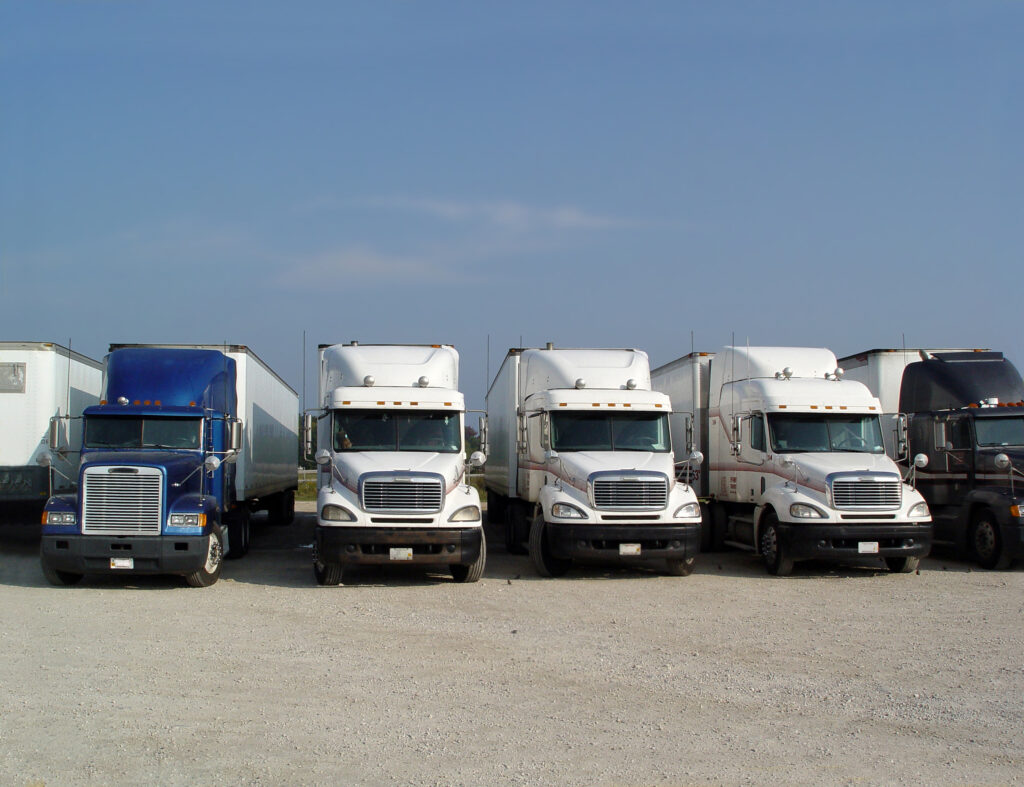
The most spoken about gain made after OTR, after all, was predictability. Dedicated routes are defined by lanes, clients, and schedules. The uncertainty of tomorrow’s loading may be anywhere — the truck able to haul tomorrow’s cargo is everywhere.
The benefits of dedicated setups become most visible in daily structure and routine consistency.
From the point of view of the driver, there is:
- A specific destination
- An exact starting time
- A fixed ending time
- A more or less stable place to sleep each night
With this kind of predictability, the cognitive stress is much less. Once again, they can plan their own private life. Medical appointments, family events, and regular sleep windows do not seem like the luxury anymore.
Key Improvements After Moving to Dedicated
| Area | Change Observed |
| Schedule | More predictable |
| Sleep patterns | More regular |
| Personal planning | Easier |
| Stress sources | Reduced uncertainty |
| Daily routine | Structured |
What Uniquely Worsened
Despite these gains, aspects of the OTR to Dedicated transition were rather surprising to numerous drivers and at times in a negative way too.
Some unexpected challenges emerge only after the transition is complete.
The Feeling of Autonomy Diminished
The loss of autonomy is probably not much talked about as a consequence of dedicated trucking. OTR drivers are frequently allowed to adjust routing, timing, and personal decision-making freely. On the other hand, dedicated routes are fine-tuned.
Dedicated vs OTR: Not an Upgrade — a Trade-off
Should I Be a Dedicated Truck Driver? Pros and Cons of Dedicated Freight
A common error many drivers make is viewing their switch as an upgrade rather than a trade-off. Dedicated routes benefit from increasing one area of truck drivers’ lives while forcing them to tighten up in another.
Dedicated vs OTR is best understood as a redistribution of pressure rather than a simple improvement.
- Improved:
- Stable Schedules
- Consistent Time Off
- Operational Familiarity
- Predictable Routines
Worsened:
- Autonomy
- Flexibility
- Earnings variability
- Tolerance for repetition
Dedicated vs OTR Trade-off Snapshot
| Dimension | OTR | Dedicated |
| Autonomy | High | Limited |
| Schedule stability | Low | High |
| Variety | High | Low |
| Routine | Minimal | Strong |
| Long-term predictability | Low | High |
How Trucking Companies Shape the Experience
Not every dedicated trucking is the same. The company is the key factor that influences the transitional feel. Well-managed dedicated accounts provide realistic schedules, buffer time, and driver input. Poorly managed things amplify the pressure and frustration.
Logistics Reality vs Driver Expectation
Dedicated routes operate at the intersection of logistics efficiency and human endurance. Dispatch systems prioritize consistency, but drivers experience the physical and mental consequences.
Potential Growth after the Transition
In the wake of the obstacles, dedicated trucking is a gateway for growth. Many drivers utilize it as a platform to achieve long-term positioning within the trucking industry.
Closing Perspective: Choosing the Right Model Within a Trucking Company
The final stage of evaluating the transition from OTR to Dedicated is the stage that makes it clear that this shift cannot just be reduced to the comforts, the distance of the trip, or the commercial titles of the kilometers. What truly determines whether the conversion to Dedicated is effective or frustrating is the extent to which the driver’s anticipations fit the operational reality inside the adoptive trucking company. Dedicated work is designed in a global way, contracts, dispatch structures, and corporate priorities that directly influence everyday life do not exist outside of it.
Many drivers take the transition as an opportunity to see the truth that stability is not always easy to explain by route type alone. It is not just dedicated routes, but also the truck company that drives the process of stability. For instance, the security, particularity, and communication which a trucking company builds its specific routes on can be the sources of stability, while the road and respective traffic are the sources of insecurity. By the same token, the same dedicated lane may be comfortable and confident at one agency and control or overwork at another. That is why drivers in the identical lanes report drastically different impressions.
The importance of the lesson concerning redistribution of responsibilities arises in due course during the transition. OTR drivers experience lack of confidence on the road while dedicated drivers tend to have their confidence inside the schedule. The introduction of fixed start times, repetitive lanes, and small buffers results in a shift of pressure from navigation to endurance. This is not a negative thing in itself, but it requires intentional adjustment and sincere reflection. Those are the drivers who learn the fact fast and get to the level of stability.
In relation to a career, dedicated driving should be regarded primarily as a stepping stone rather than the end of the path. Inside the trucking company, it can serve that purpose and lead to a retirement mentor, a specific account manager, a safety position, or long-term operational trust. However, this potential implementation only takes place if the drivers are involved in the system directly and do not just sit back and wait for things to get better.
In the main, the shift from OTR to Dedicated is an explication of the fact that it is through the interplay of choice that the trucking careers get to be developed, not just through the choices alone. The optimal decision is not the same across all situations but is rather dependent on the context. In scenarios where drivers think clearly about the choice to be made and the truck company backs it paralleled by the practical approach with sustainable systems, then the shift is not just about surviving but has even professional meanings.
Most Ask Questions
1. Is the move from OTR to Dedicated a good choice in a trucking career?
Not really. The amendment should be treated as a restructuring instead of an improvement. Although dedicated routes are the most stable and predictable streams of work, they usually result in decreased autonomy and flexibility. The decision whether it is a step on the way up or not is made by the driver in accordance with his/her values, adaptability to routines, and long-term aspirations in a trucking company.
2. Why do some drivers feel bad after serious lanes to drive a dedicated route?
This disappointment usually appears because of unmet expectations. The misunderstanding in this case is usually that many drivers expect less stress and more freedom to be given, but actually they find tighter schedules, repeating railway routes, and less amplitude in daily choices. Consequently, these lose-gains are rarely brought up at once and are only obvious when the changeover is finished.
3. Is dedicated driving always equal to a better work-life balance?
Dedicated driving alongside good management can follow your work-life balance completely. However, constant schedules may be a double-edged sword; they offer a possible plan but rigid time slots and few buffers could put stress on you. The operational design should allow pacing instead of maximum utilization to the point where things stay in balance.
4. What factors should truck drivers consider before taking a dedicated position?
Truck drivers should consider schedule rigidity, lane repetition, dispatch flexibility, quality of account management as well as trucking company approaches to delays and exceptions. Knowing these elements in advance helps avoid irritations and provides a chance to find out whether the issues are connected with personal or professional needs.