
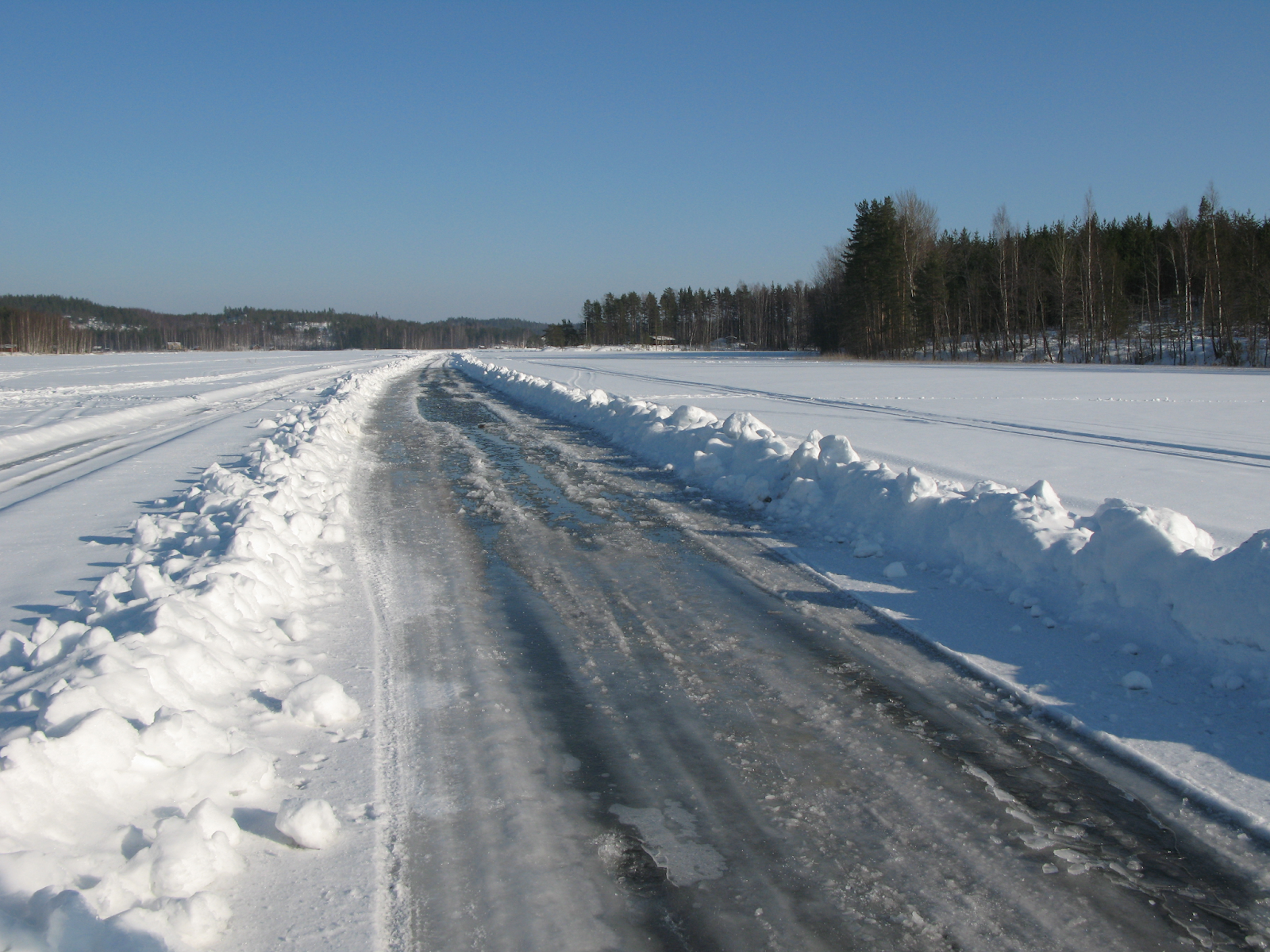
Indeed, winter regional routes can be seen as a low-risk option compared to long-haul routes. The straightforward reasoning is: shorter distances, familiar territory, and, as a result, quicker returns should exclude more dangers. However, this conclusion is often misleading. Indeed, in winter, the typical short trip on a regional route is often associated with deceptively high risks. The problem is not only the short distance. The issue is the interaction of winter weather with short-distance travel, the driver, and the operational decision-making.
Winter Roads & Holiday Loads: Top Safety Tips for Fleets
This is why winter routes require a different approach to safety assessment than longer journeys.
Why Winter Regional Travel Behaves Differently
Regional travel during winter has a special risk profile. While long-haul routes are planned days in advance with detailed weather monitoring and rest strategies, short regional trips are usually dispatched reactively. Drivers usually have multiple starts and stops, tighter delivery windows, and roads that receive less priority in winter maintenance. The addition of snow, ice, wind, and low visibility adds up so quickly, you end up with a high-risk situation you had not expected at all.
These conditions significantly increase winter driving risks on regional roads.
Core Differences Between Long-Haul and Winter Regional Routes
| Aspect | Long-Haul Routes | Winter Regional Routes |
| Planning horizon | Days in advance | Often same-day or reactive |
| Road maintenance priority | Highways prioritized | Secondary and local roads |
| Stop frequency | Low | High |
| Decision density | Lower | Significantly higher |
| Risk visibility | Easier to anticipate | Often underestimated |
Risk Perception and the Illusion of Control
The main difficulty of winter regional routes is risk perception. The short duration of the trips leads to their feeling of controllability, which, in turn, decreases the vigilance level. Drivers might try to push through bad weather thinking it is only for a short time. But this approach is a serious risk to their own decision making. Thus it can lead to wrong decisions about topics like exposure to bad weather. Driving on the winter roads is often not very dramatic; it is the cumulative effect of several small decisions that allow them to emerge.
This perception gap is a core contributor to regional routes risk during winter.
Compared with other roads, the conditions for driving in winter are very different in different regions. For example, main highways are frequently treated while secondary roads, access routes, and industrial zones are often neglected. The condition of these roads can sometimes cause an unexpected incident. Car drivers may not be careful enough. For example, they can encounter black ice on curves, which are in the shade, and snow drift on the open level ground.
Such localized trip hazards are common on winter regional routes.
Common Winter Trip Hazards on Regional Roads
- Black ice in shaded curves and intersections
- Untreated access roads and industrial zones
- Snow drift on open stretches
- Reduced visibility near loading areas
- Inconsistent traction during repeated stops
Operational Pressure of Short-Distance Travel
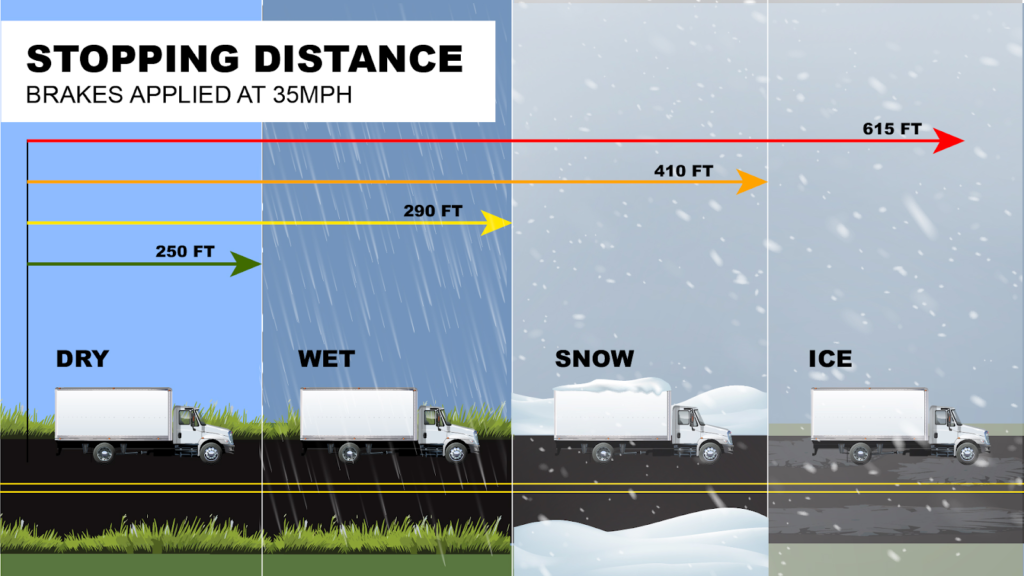
Short-distance travel also contributes to the operational burden. Often, delivery schedules remain unchanged despite winter travel conditions. The dispatcher’s expectations often compute that reduced mileage compensates for the slow speed; this reasoning fails to consider the complexity of winter road safety. The situation is further complicated by slow traffic movements, longer stopping distances, and passing under reduced safety because of quick, tight space maneuvers. But the result is a false sense of efficiency that hide the rising risk.
Short distance travel in winter amplifies exposure without reducing danger. Short distance travel in winter increases exposure to decision density, surface variability, and timing pressure, making it a key factor in regional risk evaluation.
Winter Driving Tips for Truck Drivers
In winter regional routes, the risk assessment must start with the recognition that short trips are not equal to short risks. Specifically, regular short trips can be more hazardous than a single long haul. For instance, each removal of the vehicle precools your tires, plus the brakes and the surface of the road are different, and you have to exercise your brain in a different way. Drivers are continuously retraining in changing environments from warm to cold, which affects their alertness and reaction times.
A structured short trip assessment helps reveal these hidden exposures.
Key Risk Factors Unique to Short Winter Trips
| Risk Factor | Impact on Safety |
| Cold vehicle components | Reduced braking efficiency |
| Frequent stops | Increased fatigue and reaction load |
| Incomplete warm-up | Traction and steering instability |
| High decision frequency | Cognitive overload |
| Tight delivery windows | Risk-taking behavior |
Vehicle Physics and Mechanical Stress
Moreover, driving in the winter also changes the physics of the car. The hazards in the winter weather are related to a decrease in tire flexibility, a delay in brake response, and an increase in mechanical stress. On short trips, the vehicles don’t reach their ideal working temperatures, especially in stop-and-go regional travel. This is due to issues of traction, braking, and steering, especially in the initial phase of the trip. These early, critical periods are often where the accidents happen.These mechanical factors must be included in any road risk assessment.
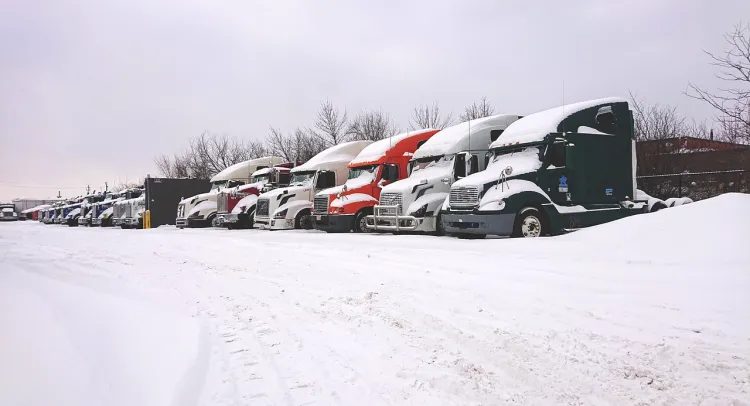
The other concealed element in winter regional driving is decision density. Frequent turns, merges, docking swoops, and contacts with local traffic characterize short trips. Each solution in the winter conditions has an added risk. For example, snowbanks make it difficult to see, icy surfaces do not allow for error, and pedestrians or local vehicles act unpredictably. In contrast to long highway stretches, regional routes require constant microscale adjustments, thus raising cognitive strain.
High decision density is a defining feature of winter driving risks on regional routes.
Route Selection and Timing Risks
Choosing the correct route is a powerful tool to mitigate the risks of winter driving. However, the planning of short trips is not structured. Drivers and dispatchers often depend on habitual routes instead of reevaluating conditions on a daily basis. Winter regional routes require a dynamic plan that involves changes in terrain, wind exposure, sun angle, and the priority treatment of the road. It is not unsafe to go on a safe route one day, but it can overnight with the onset of a temperature fluctuation or precipitation pattern.
Effective short trip assessment depends on daily route validation, not routine.
Risk assessment also needs to consider timing. Short distances are usually scheduled for early morning or late in the evening when there is little road treatment and the air temperature is at its minimum. Black ice is most common during these periods. Even mid-day trips are susceptible to the dangerous situation when melting snow freezes quickly in shaded areas. Checking winter road conditions is not only about knowing weather forecasts, but it is also about figuring out how conditions get better or worsen throughout the day.
Timing analysis is a critical part of safety assessment for winter routes.
Human Factors and Psychological Pressure
Driving in severe weather presents certain psychological pressure on drivers. The trips at a short distance foster a cognitive route of “doing it quickly,” which is opposed to the patience required for winter driving. It results in underestimating stopping distances, accepting risks at intersections, or doing rash maneuvers for staying on schedule. The drive’s conflicting demands of speed and safety are a major contributor to regional route incidents during winter.
Clear driving tips must reinforce patience over speed in winter conditions.
Thus, the risk assessment of the road should go along with the evaluation of the conditions on the road surface. This also means looking at the workload, fatigue, visibility, and recovery time for the driver. The trips allow insufficient time for recovery due to the inevitable short runs that lead to cumulative fatigue. The cold exposure leads to an increase in energy expenditure and causes mental strain, which decreases focus over time. The impact of these things may be subtle but significant, particularly during long spells of winter.
Comprehensive road risk assessment must include human factors, not just surface conditions.
Shifting the Safety Logic
The winter season also endangers other road users. Most light vehicles are not winter-ready and go down the road in unpredictable traffic behavior. The freezing braking, loss of control, and traffic collisions of cars, and so on, will put the professional drivers in the danger zone. On these routes, traffic mixing with local traffic is unavoidable; thus short trips have this element of increased risk.
This further elevates regional routes risk during winter travel.
Coming to grips with the risks of taking short winter trips on a regional basis involves shifting the whole logic of measuring safety. Miles traveled alone do not reflect the reality of the hazards associated with driving on winter roads. The assessment of risk must be based on exposures to time, complexity of maneuvers, surface variability, and stressors. A street route through snowy and icy conditions in a compact urban area may become more dangerous than a highway route through a flat terrain in the summer.
This reframing is essential for accurate short trip assessment.
Final Perspective on Winter Regional Risk
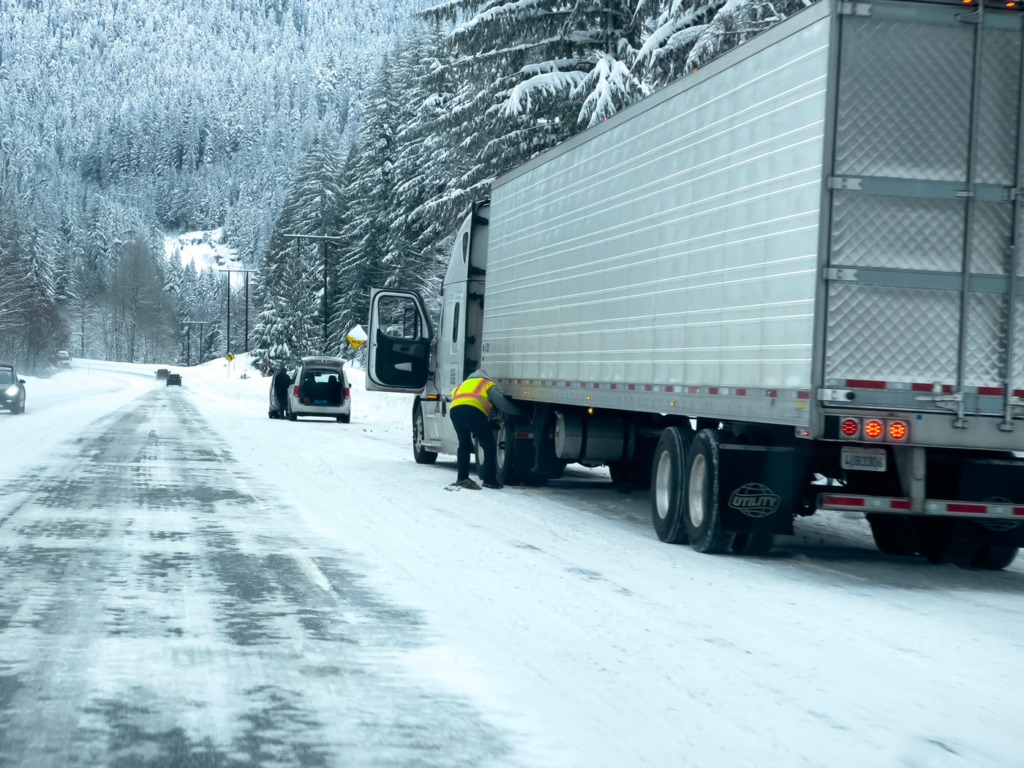
On the one hand, the cold weather risks will have an impact on incident severity. The minor issues are multiplied in severity due to the lack of roadside support, freezing temperatures, and delayed recovery. The realization of short trips often dictates the location but the environmental conditions can change quickly creating nice lively areas in the process. Because drivers feel that the facilities are close to them, they tend to underestimate the consequences of breakdowns or delays.
Cold weather magnifies otherwise minor trip hazards.
A proper evaluation of the short trip operation during winter requires the adherence to the ‘go’ or ‘no-go’ decision-making discipline. The drivers should be encouraged, without reservation, to either postpone or take detours. Over and above, the routing system must not operate purely on distance and time metrics, but instead, must integrate the risk linked to weather conditions. This cultural shift is essential to decrease the winter incident on regional routes.
This approach strengthens safety assessment across winter routes.
Driving tips for winter regional routes emphasize the idea of anticipation rather than reaction. Reduced speeds, enlarged gaps, and slow steady maneuvering are foundational rules, but their success is only feasible through strict compliance. Short trips tempt the discipline because familiarity breeds forgetfulness. Each journey must be seen as a fresh risk scenario.
Practical driving tips remain one of the strongest defenses against winter driving risks.
Although driving in winter is not inherently dangerous, it requires a more capable assessment. Short-distance travel, adverse weather driving, and operational pressure together form a distinct risk landscape. Congruently, recognizing this is paramount hence the first step to achieve a safety vision.
Understanding winter routes as high-variability systems improves overall safety outcomes.
Finally, the assessment of risks for regional winter driving necessitates the departure from the preceding assumptions to a realistic space. Short doesn’t mean simple and familiar roads are not safe. Winter is a multiplication of all the planning, perception, and execution’s weaknesses. Winter regional routing can’t be managed well without active risk assessment, flexible route planning, and real expectations, only then can they be effective.
Consistent road risk assessment is the foundation of safe winter regional travel.